
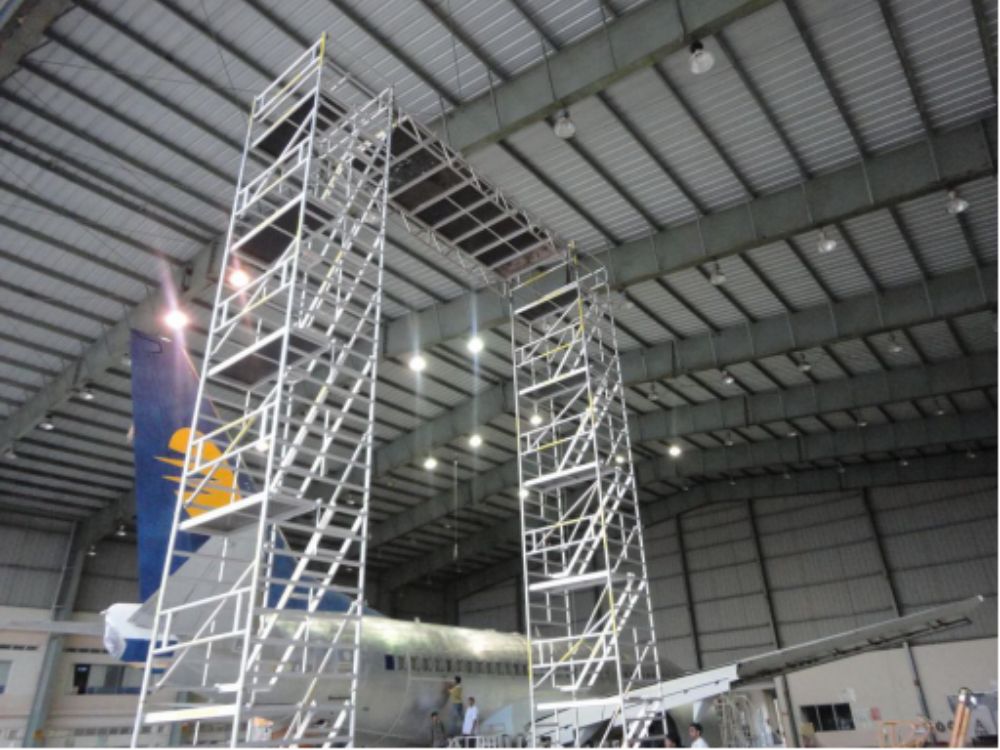

A lot of suppliers call a scaffold custom because they cut it to a different length. True custom work is engineered for one access problem and backed by drawings that show how the design works.
Ask for stamped engineering drawings first
Any workshop can cut tubes shorter and call the result custom. That is fabrication, not design. Fabrication has its place for simple repairs, but it is not enough when the shape or support conditions change.
Ask the supplier directly whether a qualified engineer will sign off on the design. You want stamped engineering drawings that show member sizes, connection details, base conditions, and load limits. The stamp means one person takes professional responsibility for the math. Without it, there is no documented engineering sign-off.
CAD or 3D models help here too. They let you see stairs, gates, toe boards, and tie points before metal is cut, catching clashes with pipework or roof lines early. Ask to review the model with the supplier to save rework on site.
Verbal promises are not enough.
Ask who does the calculations and what input they need from you. A solid supplier will ask for photos, measurements, ground conditions, and duty details. Be wary if they quote from one phone call, since real design depends on site data.
If the job is high risk, ask about independent checks. Third-party inspection compares the finished unit to the drawings and the standard, giving auditors and clients a clear trail. Good suppliers welcome that check. Reluctance is a reason to ask more questions.
Ask which standards the build follows
Standards can seem like paperwork until something fails. Then the requirements become hard to ignore.
Ask the supplier which design standard they build to and which use guideline they expect you to follow. In Australia and New Zealand that pair is AS/NZS 1576 for aluminum scaffolding design and manufacture and AS/NZS 4576 for safe use on site. In other markets the numbers are different, but the same distinction between design rules and use rules applies.
A serious supplier hands over a compliance pack with drawings, material specs, load ratings, and inspection notes that tell your crew how to erect the unit and check it before each shift. Keep it with the safety plan. Ask how tags and logbooks work from day one so crews know when the unit is ready to use and when it must stand down for repair.
Fall protection is the reason this paperwork exists. Falls from height can have severe consequences, so documented design limits and safe-use instructions deserve close attention. Ratings and test records carry more weight than promises.
If a supplier cannot name the standard, move on.
Ask for exact load ratings in writing
Catalog towers have known ratings because thousands of identical units exist. Custom geometry breaks those assumptions. A longer span or a cantilevered platform sends loads down a new path, so ratings must be recalculated.
Ask for the safe working load for the exact unit you are buying. Get it in writing with live load and dead load split out. Live load covers people and materials, while dead load is the self-weight of the frame. Both matter for base plates and casters.
Don’t stop at vertical loads. Ask about wind load and environmental ratings. A good design states the wind speed it tolerates and whether sides must stay open, which matters for outside stairs and sheeted platforms that catch wind like a sail. If you work near the coast, ask about corrosion allowance too. Salt air eats light metal fast.
Get numbers, not adjectives. ‘Heavy duty’ means nothing. ‘Rated to 225 kg per platform with two persons max’ gives supervisors something specific for crew briefings and keeps purchasing honest.
Ask where the rating plate goes and what it lists. Every custom unit should carry SWL, max persons, build date, and maker details where crews can see it. A missing plate leaves those ratings on paper rather than available to the crew. Ask if ratings change when casters replace base plates or when extra lifts go on top because small swaps can cut capacity more than crews expect.
Ask how the supplier solves site-specific access problems
Standard towers assume flat ground and open space. Real sites rarely give you either.
Gantries often sit over pipe racks while floors slope and overhead wires limit height. Crews work around live plant with little room to move. A catalog unit cannot cover those quirks without unsafe packing and reaching.
Ask how the supplier designs around your constraints. Good answers start with questions about site photos, laser measures, clearance heights, and access times. They ask how crews enter and what they carry. Site-specific design fits the task and the space without forcing crews to stretch over rails.
When standard towers cannot safely reach the access point, as in rail tanker maintenance, truck loading bays, or container yards, you need a supplier that can design and manufacture custom scaffolding in-house. Discuss truck access walkways, container handrail systems, or removable rail tanker handrails as appropriate to the task. Ask how attachment, access gates, removal, and transport arrangements are engineered for the particular equipment.
Ask about adjustability before you sign. Can legs cope with uneven slabs and can the frame split to pass through doorways? Small features decide whether the gear gets used daily or parked in a corner to gather dust.
Ask what the metal and finish are rated for
Metal choice affects service life. A clean warehouse and a coastal mine do not suit the same build.
Ask which aluminum alloy the supplier uses and why. Marine-grade alloys resist pitting far better than basic extrusions. Weld quality matters just as much, so ask if welders are coded and if welds get checked. Cracks start at poor joints.
Finish is next. Ask about galvanizing for steel parts and powder coating for grip and color coding, along with non-slip deck surfaces for wet work. Powder coat looks tidy, but it must not hide cracks during inspection. Good suppliers mask critical welds or state inspection intervals. They tell you how to touch up chips before rust spreads.
Mobile aluminum scaffolding deserves its own question. Light frames move fast and reduce manual handling strain. They also dent and overload faster if crews treat them like steel towers. Ask for caster ratings, brake details, wheel locks, and max move height. If you need to roll units with tools on board, say so now.
Salt and dust can both shorten a cheap build’s life. Salt drives corrosion, while dust packs into brakes and threads. Name your site conditions early. Ask for a material list with grades and thicknesses, and keep it with the drawings. It stops silent substitution during fabrication and helps future repairs match the original spec.
Ask for a line-item scope and honest lead time
Headline prices can mislead. One quote includes design, freight, setup, and training, while the next covers metal only. Those totals are not directly comparable.
Ask for a line-item proposal that splits design, engineering sign-off, manufacture, delivery, installation, training, and inspection. Those seven lines make the scope clearer. You can see where money goes and what is missing, then ask why one supplier allows for site measure and another does not.
Ask where design and build happen. A supplier that draws and welds in the same shop controls quality and timing. Outsourced cutting or remote engineering adds weeks when changes hit. Local manufacture shortens that loop, letting the team tweak stair angles or gate widths after a trial fit. It also makes spare parts faster.
Lead time discussions need specifics. Ask for current shop load, not brochure promises. Lead time depends on design complexity, shop workload, material supply and finishing. Ask which milestones govern the proposed delivery date and what would change it. Get milestones in writing: measure date, drawing approval, build start, and dispatch. Ask who books transport and cranes for install day so there is no stand-down while the crew waits for gear that should already be on site.
A request for 100% upfront payment deserves careful consideration.
Payment discussions should cover what deposit triggers ordering and what balance is due on practical completion. Successful handover and fitted tags are useful milestones to discuss when reviewing final-payment terms. Clear payment arrangements help keep both sides focused.
Ask what happens after delivery
Scaffolding lives hard. Forklifts clip frames and sites change fast, while crews find new uses that were never part of the plan.
Ask upfront what happens when the unit is modified, relocated, or given a new job. Most engineering approvals tie to stated setup and load cases. Drill new holes or move it to softer ground and the original sign-off may no longer apply. A good supplier explains the limit and has a path to re-certify. They state fees and turnaround for revised drawings rather than leaving those details unresolved.
Ask about after-sales support in plain terms. What is the inspection schedule and who can do it? Find out which wear parts are stocked, how fast they can ship, and what the warranty covers or excludes. Get part numbers for casters, brakes, planks, and pins. If the supplier stocks them, downtime stays short.
Ask for proof in your sector. Mining, transport, construction, and maintenance each bring different access puzzles. References from similar work beat glossy brochures. Call two past buyers and ask if the unit fit first time and whether drawings matched the build.
Ask if the supplier will re-engineer the unit when scope creeps. Scope can change quickly, and a supplier that plans for it saves you buying twice. Good gear earns trust after handover, not before.
Custom access gear is only worth it when the engineering is real. Ask hard questions and compare scope line by line. A supplier that answers without hedging belongs on the shortlist, especially when the team documents and supports what it builds.
