
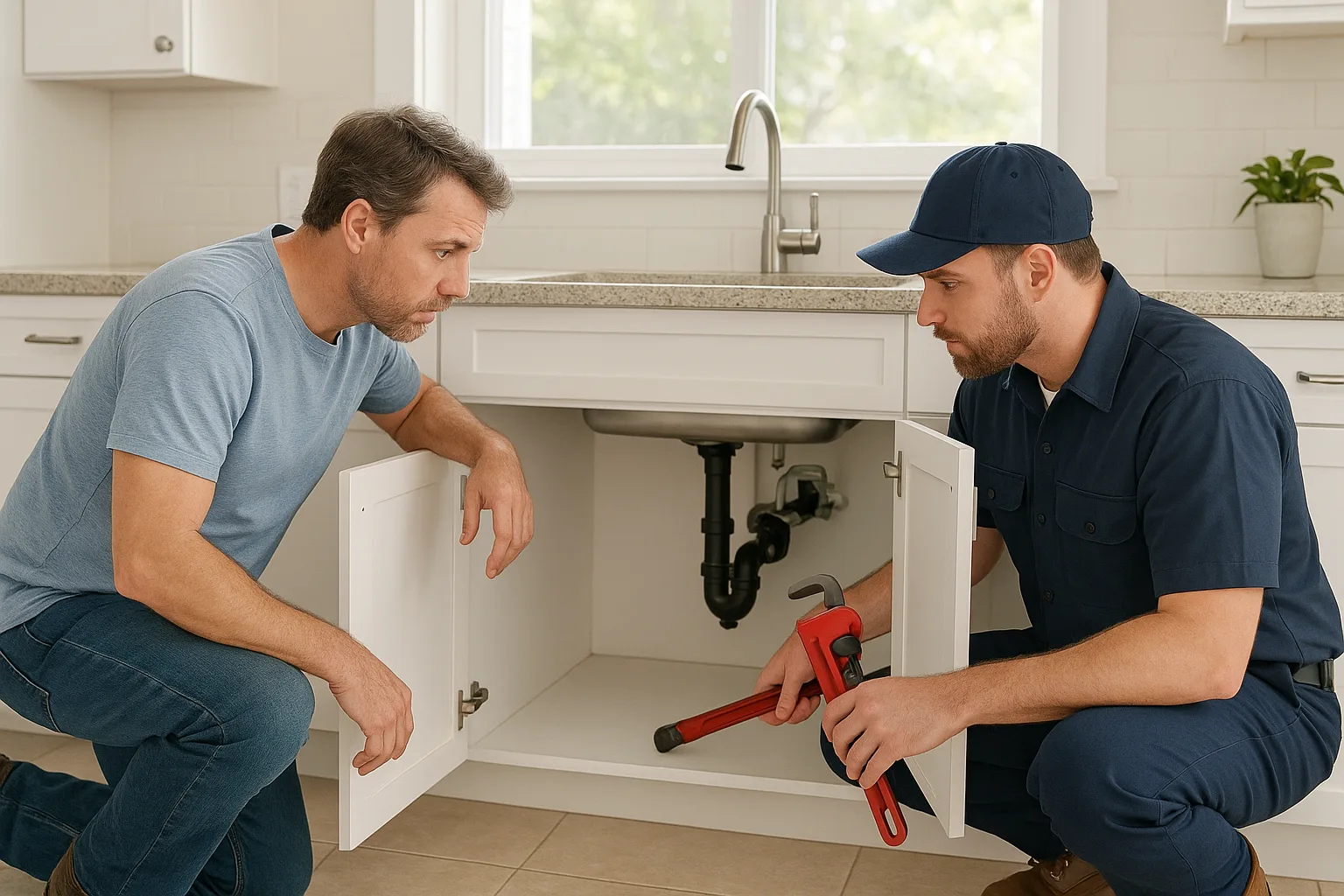

Most homeowners watch for drips under sinks and stains on ceilings. The leaks that drain bank accounts often show up somewhere else. They can sit under concrete or inside walls for months while wood softens and surrounding materials deteriorate.
The most expensive leaks are the ones you can’t see
A dripping faucet is annoying and wastes water. A pinhole leak inside a wall cavity can damage finishes, insulation and framing before anyone notices it.
We tend to rank plumbing problems by how loud they are. That habit works against us. Water that escapes where we can’t see it soaks framing and creates damp conditions that may not smell right away. By the time paint bubbles or floors cup, the fix may involve more than a pipe. It can mean water damage restoration, new drywall and replacement subfloor across more than one room.
Small hidden flows add up fast. The average household’s leaks account for nearly 10,000 gallons of wasted water every year (EPA WaterSense). That number does not come only from gushers. Silent toilet flappers and slow weeps at joints that never dry contribute too.
You pay for what the water touches.
We get better results when we treat our homes like systems to check rather than boxes to fix after failure. A quick look in the right place each season beats a remodel after a supply line lets go inside a vanity. Home construction hides pipes for good reason because it looks clean. That clean look means we have to go looking for trouble on purpose.
Slab leaks can hollow out your foundation
A slab leak is a break in a water line under the concrete foundation. Homes with copper lines in or under the slab can experience them, although pipe material, water chemistry, installation and local soil conditions all affect the risk.
Hot water lines may show signs sooner in some systems because heat and water chemistry can contribute to pipe wear. Escaping water can wash fine soil away and leave a void beneath the slab. If enough support is lost, concrete may crack or settle. Floors can also stay damp or warm along one path across a room while the rest of the slab feels cool.
Watch for warm spots on tile or wood that don’t fade. Listen for running water when no tap or water-using appliance is operating.
Check baseboards and door frames for hairline fractures that keep growing. Those lines can have several causes, including movement in the slab or surrounding structure, so they deserve attention rather than guesswork. An active slab leak may worsen over time, damage flooring or contribute to movement that makes doors stick and tiles loosen.
Don’t wait indefinitely to see if the area dries. Turn off fixtures and arrange appropriate leak detection before more water escapes. Patching the floor over an active leak only hides the sign. It does not address the water below.
A sewer problem does not act like a sink clog
A slow bathroom sink is often caused by hair and soap near the trap. A failing main sewer line tends to affect several fixtures or the whole home. Learning the difference can prevent weeks spent plunging a line that needs a different repair.
Listen for gurgling toilets when the washer drains. Watch tubs and showers that remain slow even after you clear the strainer.
Walk the likely route between your home and the public connection or private waste system. Unusually green strips or sunken soil can sometimes point to a leaking line, root intrusion at a cracked joint or a bellied section that holds waste.
Clogs in a p-trap or vent stack can mimic mainline trouble. A blocked or poorly functioning vent can disrupt airflow, affect trap seals and make drains gurgle. If accessible vents and local traps are clear and more than one fixture backs up, the trouble may be deeper in the system.
A sewer camera inspection can show roots, offsets and bellies in suitable lines without immediate excavation. Depending on the pipe, damage and site conditions, some crews repair breaks with trenchless methods such as pipe bursting or relining. These methods can reduce digging in some cases, but they are not suitable for every line. A clear diagnosis comes first because guessing wastes money.
Water heaters and high pressure wear out quietly
Tank water heaters collect sediment. Hard water drops minerals that can settle on the bottom and form a crust. That buildup may reduce efficiency, contribute to noise and affect performance, depending on the heater design and local water quality.
Tankless units don’t store a full tank of water, but scale can still coat their heat exchangers. Many tank units use a sacrificial anode rod that corrodes to help protect the tank. Follow the manufacturer’s maintenance schedule for flushing, descaling and anode inspection because requirements vary by model and water conditions. If hot water runs out unusually fast or smells metallic, have the unit assessed.
Older homes with galvanized piping may have a second drag on hot water. Those pipes corrode from the inside out. Rust narrows the bore and reduces flow at taps. A brown tint after water has sat unused can be another clue, although discolouration can have other sources.
High pressure can be quiet too. Many residential systems are designed to remain at or below 80 PSI, but the correct range depends on local code and the equipment installed. Excessive or fluctuating pressure strains valves, connectors and supply lines. They may not burst right away. Some begin to weep, including inside walls where insulation hides the first damp signs.
Listen for water hammer. A knock when a tap or valve shuts quickly can mean pressure changes are moving unsecured pipes or stressing the system. Repeated movement can loosen joints over time. A properly selected pressure regulator can hold incoming pressure within the required range. If you have one and pressure still climbs, have the system tested before replacing parts.
Store-bought fixes can’t find systemic problems
Chemical drain cleaners may clear a small plug near the drain. They don’t show why two bathrooms gurgle or why a wall stays damp, and they may be unsuitable for some pipes or clogs. A wrench tightens what you can see, but it won’t find a belly ten feet out or a pinhole behind tile.
Systemic trouble needs diagnostic tools most homes don’t have. For leaks that appear across rooms or drains that fail in pairs, Plumbers are essential when professional diagnosis and repair are needed. Depending on the system, plumbers may use cameras, pressure tests, acoustic equipment or other methods to narrow down a fault. A measured diagnosis beats cutting several holes to chase a stain.
You can still handle suitable small jobs. Swap an accessible flapper or clean a removable p-trap if you know how to isolate the fixture safely. Don’t keep pouring chemicals into drains that stay slow in two rooms. Avoid opening walls simply to hunt a hiss. Those signs call for measured tests rather than more force.
How to spot a hidden leak early
Your water meter can help settle the question. Find the meter and follow the utility’s instructions for accessing it. Note the small leak indicator dial or digital flow reading if your meter has one. Shut off ice makers and avoid using water for 30 minutes. If the indicator still records flow, water may be moving somewhere it shouldn’t, although automatic appliances and irrigation should be ruled out.
Pair that test with a walk through the home. Compare this month’s bill with the same month last year while accounting for changes in occupancy or water use. Open vanities and look for swollen particle board, staining and soft caulk lines. Smell for mustiness in cupboards or closets that share a plumbing wall.
Damp drywall and other cellulose materials can support mould when they remain wet. Moisture may also spread beyond the first visible stain through cavities, flooring and insulation. Remediation can require removing damaged sections, drying the structure and correcting the leak that caused the problem.
A proactive check is usually less disruptive than repairing widespread water damage. The cost of pressure testing or professional leak detection varies with the system, access and location of the suspected fault. A kitchen rebuild after cabinet rot and warped flooring is a much larger job, while drywall replacement and subfloor repair add materials and labour. Early proof helps keep the repair focused. Late proof often expands the scope.
What to check before you buy and when water won’t stop
Hidden plumbing can disrupt a sale. Buyers may choose a plumbing inspection and sewer scope before closing, depending on the property’s age and system. Scopes can find roots, offsets and standing water in accessible yard laterals. Pressure checks may reveal some supply-side problems, although no test can guarantee that every weak joint will be found. Without a scope, a collapsed joint or root-choked lateral might only become obvious after a backup.
Sellers don’t always know a line bellies under a driveway. A report that shows standing water gives buyers information to discuss repairs or credits. Ask about building permits for past bathroom moves and repipes where local rules require them. Unpermitted or poorly documented work may involve incorrect slope, inadequate venting or other defects that cause trouble after closing.
Know where your emergency shut-off valve is now. Find the main valve where water enters the home or at the meter, and learn how that specific valve operates. Test it periodically if the valve type, utility rules and system condition allow. Basements and crawl spaces with sump pumps also need appropriate checks because a failed pump can let groundwater enter and damage materials from below.
Small habits catch developing trouble. Look under sinks each month for damp rings and green crust on valves. Run your hand along accessible flex lines to feel for moisture. A suitable pressure gauge attached to a compatible hose tap can help track household pressure. Readings that remain outside the recommended range mean the system needs attention.
Operate accessible fixture shut-off valves periodically when it is safe to do so. Hard water and corrosion can make stems difficult to move. A valve that won’t operate is little help when a hose splits. Replace damaged or seized stops before an emergency, and label the main so other household members can find it quickly.
When water won’t stop, act in order. Shut the main using the correct method for that valve. Isolate electricity or gas only when you can do so safely and follow the appliance instructions, especially if water is near electrical equipment. Relieve line pressure at a suitable fixture, move belongings away and begin drying after the flow stops. Call for help with photos and meter readings ready.
Good records are useful too. Keep scope video, inspection reports and pressure readings with the property file. Note dates for heater maintenance and regulator replacement. Clear documentation helps future owners and can support an insurance claim when a sudden split soaks a ceiling. Paper won’t stop leaks. It can shorten arguments about maintenance and damage.
Pull washers and fridges out when accessible and inspect their hoses according to the appliance manufacturer’s guidance. Flex lines with rust spots, cracks or bulges need prompt replacement. Joints that show green or white deposits may have leaked before. A few minutes with a flashlight beats mopping a laundry at midnight.
Look at the water heater pan during routine checks. A dry pan with rust or mineral lines may have held water before. A pan drain that ends indoors may not provide useful protection. Make sure the installation follows local requirements and directs water to an approved location. Small corrections can keep a minor leak from reaching drywall or flooring.
Hidden leaks don’t always give clear warnings. They give hints. Warm floors, unexplained meter movement and high bills are worth investigating. Check the meter, know how to operate the main and arrange suitable tests while the repair is still manageable.

Comments are closed.