
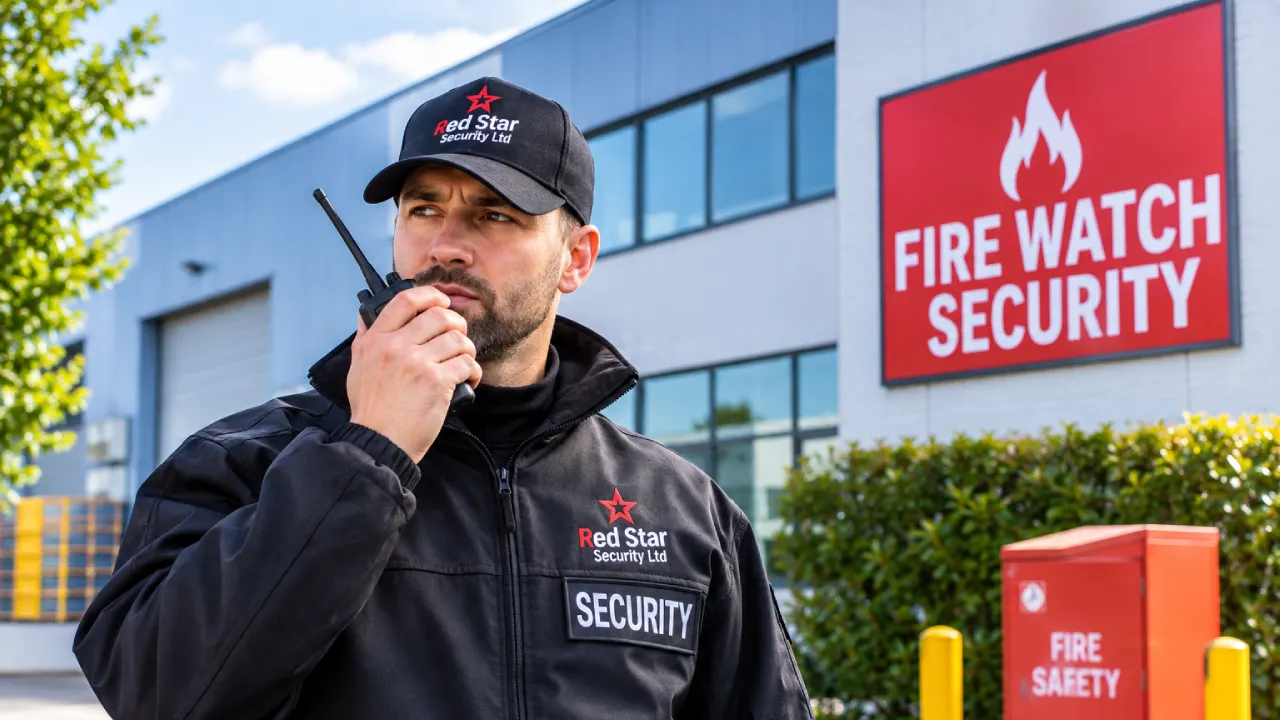

Fire watch and site security often run as separate functions inside the same building, with different supervisors, different radios and different patrol routes. The guard watching for smoke and the officer controlling access rarely share the same information in real time.
The gaps show up in radio traffic, patrol schedules, evacuation drills and logbooks. They are cheaper to fix before a fire marshal or an insurance investigator finds them.
Radio traffic that never crosses over
Security teams and fire watch guards frequently work on different radio frequencies and report to different managers. The arrangement can look tidy on an organizational chart, but at 2 a.m. it can slow the response when smoke appears.
A fire watch guard who smells smoke near a hot work area needs the security desk to unlock doors and pull camera feeds before crews arrive. If the alert has to travel up one chain of command and back down another, minutes can pass before anyone acts.
The fire marshal, acting as the authority having jurisdiction, sets the terms when a watch is mandated. Security management is rarely in that conversation, and the requirements do not always reach the control room.
Interoperable communications handle the mechanics: one shared channel, plus a written answer to who calls the fire department.
Patrol routes that double up while zones sit empty
Without coordinated scheduling, a security officer and a fire watch guard can walk the same corridor at the same time. The business pays two hourly rates to cover one stretch of floor, while a loading dock or mechanical room may go unmonitored.
Fire watch during hot work is a stationary post with a set watch period, and a security patrol cannot stand in for it. The two teams need route and schedule information so each knows where the other is posted. Fire watch personnel stay at their assigned location without added rounds or interruptions, while security routes cover the other zones of the property. Any area exposed to sparks that the post cannot see, such as the floor below an opening, needs its own designated fire watch. Post orders that divide the property by zone and by hour keep both scopes intact.
Evacuation plans that conflict at the exit
Security officers are trained to restrict access and protect assets during an incident. Fire watch guards are tasked with keeping evacuation routes clear and moving occupants out quickly.
Those instructions can conflict at the door. An officer who locks down a service entrance to protect inventory can block the egress path a fire watch guard has just directed people toward.
Access control systems add a second failure point. Doors that release on alarm must still release when part of the system is impaired, which is often the reason a fire watch exists at all.
Joint evacuation drills can expose these conflicts before a real alarm does.
How businesses can audit the gap
A business that suspects these gaps can start with an audit that compares post orders, radio plans, log formats and contact lists across both teams and marks every point where they disagree.
The radio plan should be tested live, with both teams on the air at once. Each disagreement becomes a line item with an owner and a deadline.
Some gaps need outside staff. When a fire marshal mandates a watch during an alarm outage or a renovation, businesses in the North Texas region can look up coverage on a Dallas-area provider page, for example fastfirewatchguards.com/texas/dallas/, and should share the existing site security plan with any candidate.
Logs and duties that don’t survive scrutiny
Fire watch guards keep patrol logs, and security teams keep incident reports. In many buildings the two records use different formats and live in different systems.
Fire marshals and insurance investigators read those records side by side after an incident. Inconsistent entries make continuous monitoring hard to prove, and a patrol log with a 40-minute gap raises questions even when nothing burned. Missing records during a system outage can make it harder later to reconstruct whether fire watch coverage was continuous.
The way duties are divided can create the same exposure. NFPA standards and local fire marshals often require a dedicated fire watch during alarm outages, sprinkler shutdowns, renovations or hot work. General security officers usually are not trained or documented for that duty.
Hot work permits typically name a fire watch for the duration of the work and a set period afterward. If the contractor assumes security is covering that window and security assumes the contractor is, no one is left watching the hazard.
Standard operating procedures should state where security duties end and fire watch responsibilities begin, by task and by location.
What alignment looks like in practice
Shared standard operating procedures give both teams the same instructions. A common radio channel keeps everyone on one frequency, and joint drills test the arrangement.
Drills should include the scenarios that create the most friction, such as a hot work permit near an exit route or an alarm panel dark for repairs.
The business continuity plan should list the fire watch provider, the security contractor, the fire marshal’s office and the insurance carrier in one place. Contact lists need regular review because phone numbers change more often than procedures do.
Scheduling a drill this quarter can reveal most of the remaining problems before an inspector or an incident does.
